
Addicted to Fatigue
The goal is adaptation, not exhaustion.

Effort alone doesn’t create progress. It absolutely is an ingredient in the process, but so are direction (intention) and structure (training). Without the latter two, you’re just exercising — exerting yourself, getting sweaty, and feeling tired.
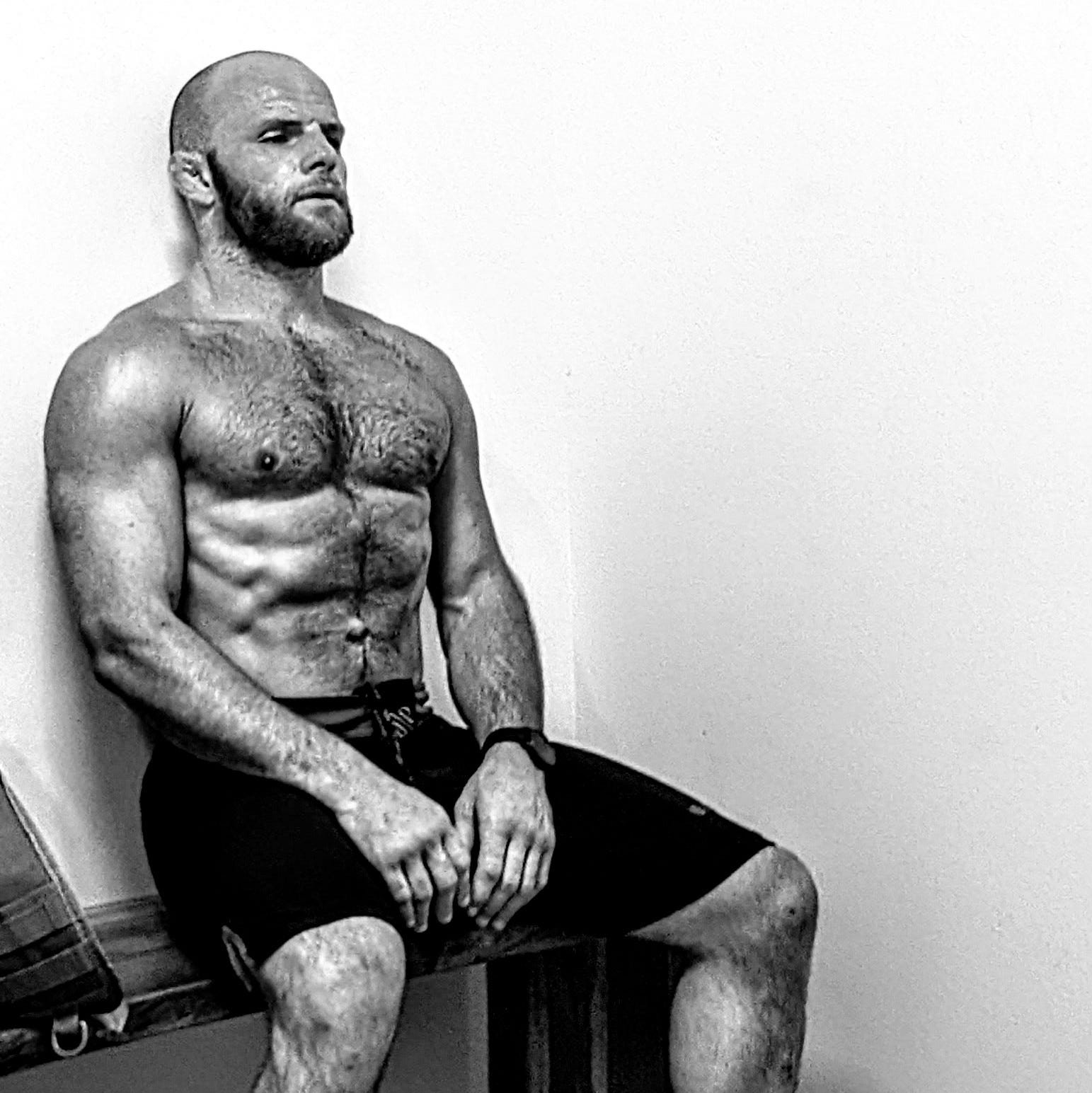
I’ve talked a lot about “normalization” and “general populations” lowering the accepted standard of (lacking) fitness. You may have also heard this referred to as a “comfort crisis.”
While there is a lot of merit to this idea, there’s also a lot of absurd pretentiousness in the sport / fitness world exhibited by people who have done just enough to step outside that “normal.”
Unfortunately, the relative perspective and / or limited experience of those people often leads to a quite skewed belief. I’m sick of rhetoric about elite / optimal / maximal / peak athletes; so I’ll defer back to Tim Grover’s definitions of: posers (I added this one), players, closers, and cleaners.
Suffice to say for now that “cleaners” don’t need reassurance because they’re already asking the right questions. Effort and sacrifice are implied by their very existence. Their life and the (usually intentional) disproportionate return on investment is absurd to the average player and role-played by the poser.
For a lot of people I train and work with, excellence is the standard. That’s not to say I’m in a room full of world champions every day, it’s to say that we don’t allow excuses, encourage honesty, and pursue training that exhibits that integrity.
However, the flip side — that’s quite prolific in CrossFit and combat sports alike — is that the “everyday porrada” mentality bites us in the ass. By trying to “win” the warm up and every practice round or WOD we (1) never develop the skills that will actually help us win, (2) eventually get very sharp, but very brittle, and (3) thereby only end up learning how to get beat up.
Obviously, there are endorphins associated with exerting ourselves that feel good. However, social media, magazine covers, and commercial big-box gyms have made this all much worse with tropes like:
“grindset” / 5 am / “humble brag”
It’s not a practice until someone pukes.
If you’re sore, you did it right.
Make practice suck so competition feels easy.
Progressive overload means persistent and perpetual progress.
Don’t forget to “do more” and include “active recovery” (more stress) like cold plunges, saunas, fasting, etc.
At any rate, your training is only as good as your ability to recover from it. That remains true from a stimulation perspective. In order to develop “novel adaptations” (i.e. progress) we need novel stimulation. What got you here won’t be enough to get you to the next level.
By contrast, in order to get the most out out of a given training sessions I need to have appropriate intention, attention, effort, and physicality. RPE (rate of perceived exertion) is a greatly misleading metric. Just because something “feels hard” doesn’t mean I’m actually producing a good output.
So, yes, I cannot buy performance on credit and perpetually accumulate recovery debt. Does that mean that recovery is the ultimate goal? Well, no.
If you really want to be 100% recovered all of the time, the best way to do that is to never train, never get tired, never exert yourself, and avoid any and all risk. Now, obviously that would make it quite difficult to develop the skills (movements and implements) needed to express competitive attributes (strength, endurance, athleticism, etc.).
As mentioned above, there are people profiting greatly on both sides of this equation. There’s a lot to be sold:
Gym memberships / subscriptions.
Supplements for “performance.”
Supplements for “recovery.”
New functional / movement / diet trends and machines just like flavors of Doritos and Mountain Dew.
Recovery gadgets, portable sauna, and refrigerated tubs.
What I’m trying to highlight here is the difference between feeling tired / exhausted and the reality of being capable. The latter, capability, requires one to capitalize on what they’re able to develop.
For instance, I am probably able to achieve a 500 lb. deadlift with months of dedicated practice. However, I’m certainly not capable of a 500 lb. deadlift at this exact moment. Further, I certainly would not try to capitalize on that ability by testing my 1RM every training session (the entire point of this article).
“The suck” may be a necessary by-product, but it usually isn’t the objective. There are a lot of ways to make a workout suck, but how many of them move you closer to your goal? Yet, many people spend decades exerting / exercising / exhausting themselves and call it “working out” while they remain un-fit, in-capable, or otherwise unchanged by either their cumulative effort or any single experience.
Soreness is your body telling you the credit card bill is due. It only gives a vague indicator of your spending habits and has virtually no predictive value regarding future ROI.
The paramount question for any training (career / program / session) is “did I get better?” The results do not lie. Sometimes what I need to get better is trying hard. Sometimes it’s paying attention. Sometimes it’s resting so I can be capable of expressing my abilities better tomorrow.
For what it’s worth, you should know that the game is rigged. If you actually got better on your own, the magazines and globo-gyms couldn’t sell you any more magic pills or miracle 6-week programs.
Does your coach / trainer want you to get better, or are they just plugging your credit card every week?
We owe it to ourselves to do better than asking “how fast can I burn out or break myself?” Choose to play and win the long (infinite) game of “how can I get better?” The answer isn’t fatigue, or recovery, it’s adaptation.
“Your greatest sin is that you have destroyed and betrayed yourself for nothing.” ~ Dostoevsky
Bounty Program: Team Fitness

The idea of group or 30-day fitness challenges is pretty worn out. However, it’s a tactical hook that many people still cling to for change. As usual though, we do things a bit different around here.